
ADVANCED BONE & JOINTS HEALTH CENTRE
JANUARI 2026
How to Tell If You Have an ACL Tear
|
The anterior cruciate ligament (ACL) is one of the most commonly injured structures in the knee. Athletes and physically active individuals face a higher risk, but ACL injuries also happen during everyday activities from casual jogging to slipping on uneven or wet surfaces.
Because the ACL plays a critical role in knee stability, an injury can significantly disrupt daily movement, work, and sports performance. Many people struggle to determine whether their knee pain or instability stems from an ACL tear or another knee condition.
This article explains the role of the ACL, the common signs and symptoms of a tear, how doctors diagnose it, and what steps you should take if you suspect this type of injury, based on guidance from Advanced Bone Joint Specialist.
What Is the ACL?
The ACL is one of four major ligaments that stabilise the knee joint. It runs diagonally through the centre of the knee and connects the thigh bone (femur) to the shin bone (tibia). It helps:
- Preventing excessive forward movement of the shin bone
- Providing rotational stability during twisting or pivoting movements
- Supporting coordinated knee motion during running, jumping, and landing
Signs and Symptoms of an ACL Tear
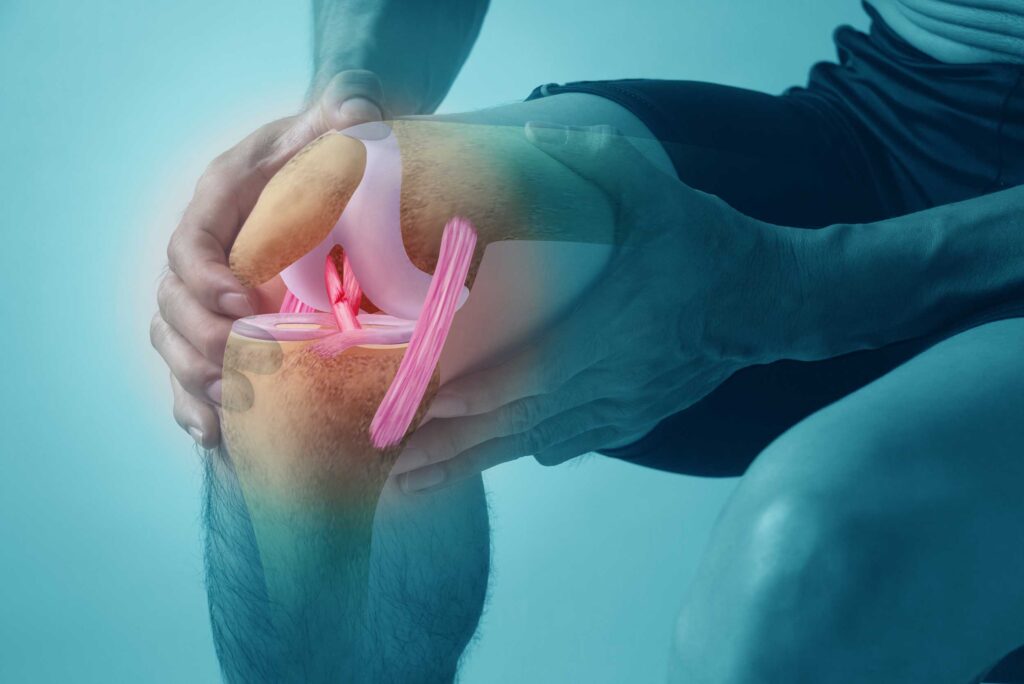
Recognising ACL tear symptoms early helps prevent further damage to the knee, including injuries to the meniscus or cartilage.
1. A “Pop” Sensation at the Time of Injury
Many individuals hear or feel a sudden popping sensation when the injury occurs. This often signals an ACL tear.
2. Immediate Knee Pain
Pain usually develops quickly and can become severe enough to stop activity immediately. Although the intensity may reduce after the initial injury, discomfort often continues during movement.
3. Rapid Swelling
Swelling often appears within the first few hours due to bleeding inside the knee joint. This rapid swelling helps doctors distinguish an ACL tear from a mild knee sprain.
4. Knee Instability or “Giving Way”
A torn ACL reduces knee stability. Many patients report that their knee feels unstable, especially when turning, pivoting, or walking on uneven surfaces.
5. Reduced Range of Motion
Pain and swelling can limit your ability to fully bend or straighten the knee. Squatting, kneeling, or climbing stairs may become difficult.
6. Difficulty Bearing Weight
Some individuals struggle to place weight on the injured leg, particularly during the early stages. Others can walk but feel insecure or unstable.
Partial vs Complete ACL Tears
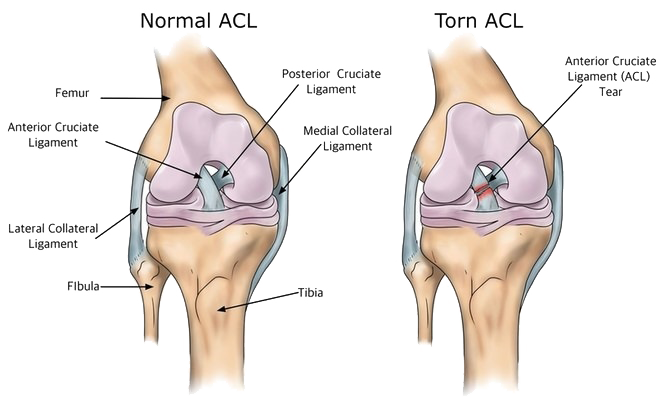
Doctors generally classify ACL injuries into two categories:
Partial tears: Only some ligament fibres are damaged. Symptoms may appear milder but can still affect stability.
Complete tears: The ligament ruptures fully, often causing significant swelling, instability, and functional limitation.
Regardless of the severity, professional assessment is recommended, as untreated partial tears may worsen over time.
Conditions That Can Mimic an ACL Tear
Several knee conditions may produce symptoms similar to an ACL injury, making accurate diagnosis essential. These include:
- Meniscus injuries, which may cause locking or catching sensations
- Collateral ligament injuries, often associated with pain on the inner or outer knee
- Patellar dislocation, which may involve swelling and a popping sensation
Even partial tears require professional assessment, as they can worsen without proper treatment.
Conditions That Can Mimic an ACL Tear
Several knee conditions produce symptoms similar to an ACL injury, which makes accurate diagnosis essential. These include:
Meniscus injuries, which may cause locking or catching sensations
Collateral ligament injuries, which often cause pain along the inner or outer knee
Patellar dislocation, which can involve swelling and a popping sensation
Because these symptoms overlap, self-diagnosis may delay proper treatment.
How Doctors Diagnose an ACL Tear
Accurate diagnosis allows doctors to create an effective treatment plan and reduce the risk of long-term joint damage.
Clinical Examination
Doctors perform a detailed physical examination to assess knee stability, swelling, and range of motion. They use specific manoeuvres to evaluate the integrity of the ACL and other ligaments.
Imaging Tests
Doctors may recommend imaging studies to confirm the diagnosis:
- MRI scans provide detailed images of soft tissues, confirming ACL injuries and identifying associated damage to cartilage or the meniscus.
- X-rays may be used to rule out fractures, although they do not directly show ligament injuries.
These investigations help ensure an accurate diagnosis and guide the most suitable treatment plan.
What to Do If You Suspect an ACL Tear
If you suspect an ACL injury, the following immediate steps may help reduce symptoms:
MRI scans provide detailed images of soft tissues and help identify ACL tears as well as associated cartilage or meniscus injuries.
X-rays help rule out fractures, although they do not show ligament damage directly.
These tests confirm the diagnosis and guide the most suitable treatment strategy.
When Should You Seek Professional Assessment?
Do not ignore persistent knee pain, swelling, or instability after an injury. Early assessment helps doctors:
Confirm whether the ACL or another knee structure is injured
Reduce the risk of further joint damage
Plan timely treatment and rehabilitation
At Advanced Bone Joint Specialist, our team manages ACL injuries using evidence-based treatment strategies tailored to each patient. With structured rehabilitation and proper care, many patients return safely to daily activities and sports.
Start Your Recovery with a Free Consultation
Get expert advice from our bone and joint specialists no commitment, just care.